
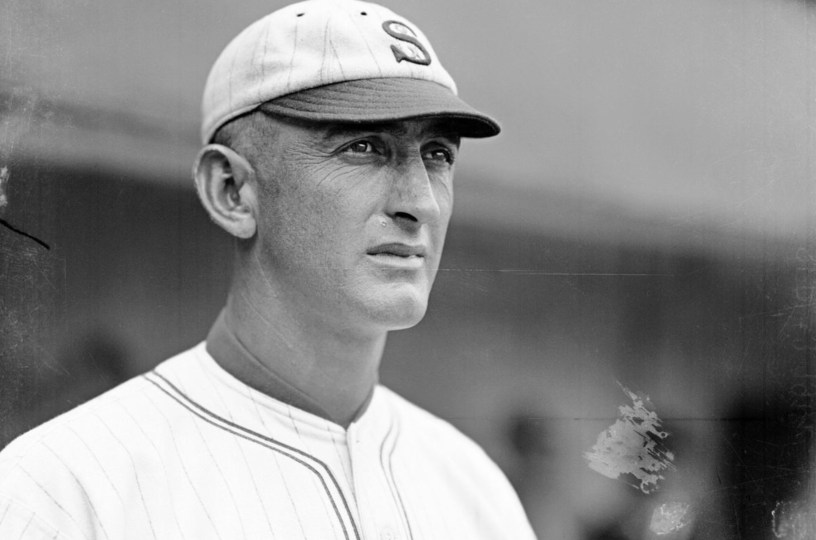
For the last 10 years, I’ve been researching and learning as much as I can about the life of Joseph Jefferson Wofford Jackson, a poor mill boy born in Pickens County, South Carolina, who grew up to be one of the most talented natural baseball players in history. I was drawn in from his unconventional lifestyle prior to professional baseball compared to many of his counterparts, and fell down the rabbit hole that would be the 1919 “Black Sox Scandal.” I realized after my first college paper on the topic that I wasn’t even close to being finished, despite my high marks and the assignment being complete.
The more research I did, the more I learned about Jackson’s involvement in the scandal. I wrote every college paper I could about the topic, and every presentation I made was on Shoeless Joe and the Black Sox Scandal. But Something didn’t sit right with me. The more I learned about Joe, the more I knew he couldn’t have actually done anything wrong. The guy accused of throwing ball games for extra cash was not the guy I grew to know and love through books and research articles and visits to his hometown.
But through communication and discussion with fellow historians, I realized there are many different degrees to guilt and condemnation. Some people, the Joe Jackson sympathizers like me, feel like he didn’t do anything to actually throw the series, and therefore he’s innocent. Other people feel that just by accepting $5,000, which we know to be fact, makes him guilty—regardless if he did anything to throw the series or not. A very few believe he actually did attempt to throw the series but there’s not much statistical evidence or even hearsay evidence to support that.
Generally speaking, however, the consensus has been “it’s been long enough.” The “eight men out” have been punished for almost 100 years, now, and it’s time that punishment be lifted. It’s time to recognize these players for their accomplishments on the field, and no longer condemn them for their gambling antics off it.
Like many of you, in the early beginnings of my research journey, I believed it was the MLB Commissioner’s job to overturn Judge Kenesaw Mountain Landis’s edict and reinstate Joe Jackson into baseball. I researched every commissioner who was presented the case and turned down the endeavor to reinstatement. I researched why. Each time, the commissioners did not believe it was their place to overturn the first Commissioner’s ruling, and they didn’t believe there was sufficient evidence to support doing so.
But then I spoke with some fellow historians, and a few members of the Commissioner’s office. And they had some interesting words to say.
Joe Jackson is no longer on the “ineligible list” for baseball.
In fact, there is no such list. There are players who are currently deemed ineligible and banned, like Pete Rose. But once the player has passed away, his lifelong banishment has ended, and MLB has no reason or desire to be punitive and maintain a posthumous banishment. There is no point to reinstatement because there is no player to be reinstated. Jackson’s banishment ended on December 5th, 1951, when he passed away from a heart attack in his own home.
If you look at the Hall of Fame’s rule that’s allegedly keeping Joe Jackson out of it, it’s the Rose Rule which was implemented in 1991. The Hall of Fame was established in 1936. For 55 years, there was no such rule that a player banished from baseball would be banished from the Hall of Fame forever.
But right underneath that rule, it states that a player is eligible after his death.
I don’t believe the two rules to be mutually exclusive, but I do find it odd that Joe Jackson is still being punished even though he’s technically eligible. The Hall of Fame is allowing the public to believe it’s the Commissioner’s decision to reinstate him to allow him into the Hall, but that’s not the case at all.
It’s purely the Hall of Fame’s decision.
And that’s what I’m working on this year at the Winter Meetings. Joe Jackson’s only chance to get in the Hall this decade is when the Early Baseball Era Committee meets to vote him in at the 2020 Winter Meetings, for induction ceremony in 2021. But first, he needs to get on the ballot.
So here’s my call to action: speak out, not against the MLB, but against the Hall. Demand clarity for Jackson’s eligibility. Speak your mind about whether Jackson belongs in the Hall for his outstanding abilities that overcame the Deadball era and brought new life to baseball, or why he’s still being punished by the Hall nearly 100 years after the fact, and 68 years after his death.
I want the public to know it’s not the Commissioner’s call anymore, and it never was. It’s purely the Hall of Fame, and their decision whether they want to include him in the Early Baseball Era Ballot for 2020. And if they decide not to, I’d like to know why.
 Chuckles Sports